
Study-habits-printable-guide-UniSkills.pdf
Study habits
Table of Contents
Introduction
Study is an important part of your university life. Learning how to manage your study and developing good study habits will help you study effectively and maximise your learning at University.
What you will learn
- techniques for developing good study habits
- strategies to help manage your time effectively
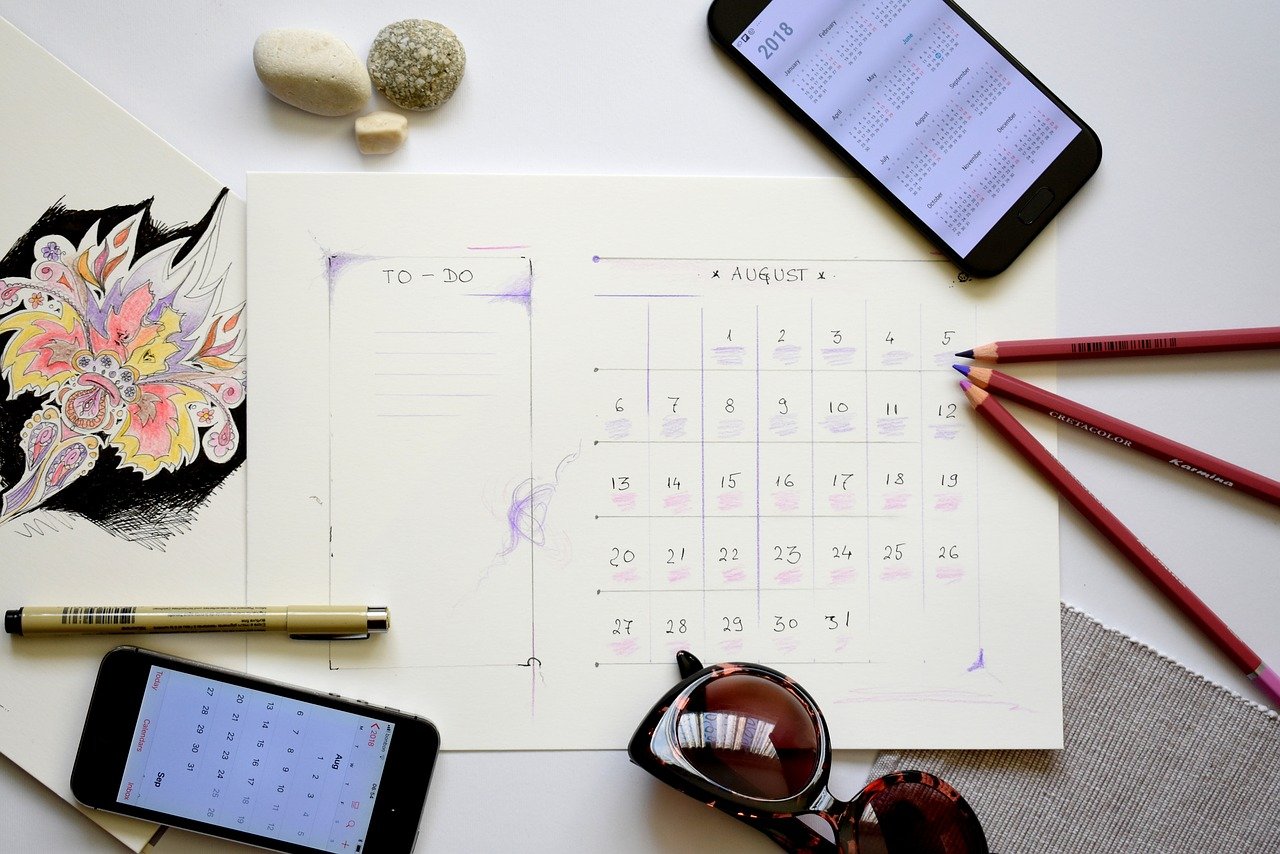
Image: Planner by Marijana1 Pixabay
Start planning
The key to keeping on track of your studies is to organise yourself - carefully organising your study time so you can juggle family and other personal commitments. This means getting into the habit of planning! Planning is the basis of good time management. It allows you to track what you are doing, monitor what you have already done and how much time you have available to you. Whether it’s short-term or long-term planning, creating a plan will give you guidance and direction, allowing you to manage your time more effectively.
Semester plan
At the start of the semester, begin planning how you are going to manage your study load with your other commitments. This will give you an overview of your commitments for the whole semester. Consider the following:
- Check the University calendar - it shows semester breaks, study weeks, tuition-free weeks, exam dates etc.
- Use your unit outlines - this will give you a general overview of the whole semester, including assessment due dates.
- Plan your timetable - use the Curtin timetable to plan a potential timetable for your different combinations of units. Record dates for lectures, tutorials, tests, assignment submissions and other significant events.
Using planners such as the above can help you record important dates so you are prepared for what lies ahead. If there are any serious clash of commitments, you will be able to see it and negotiate with your tutors.
Weekly plan
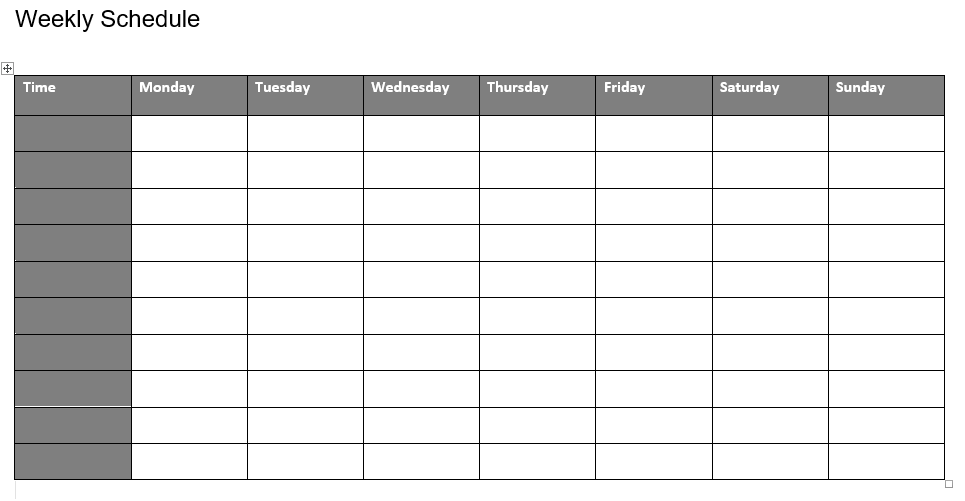
Once you have noted down the key dates for the semester, start planning for each week. Your lectures and tutorial times for the various subjects are usually scheduled at the same time each week so try and develop a weekly study routine. Your weekly plan should include both study and personal activities, for example:
- Lectures and tutorials
- Pre-reading material
- Work and family commitments
- Health and well-being activities (sports, gym, yoga etc)
Daily plan
Keeping a daily plan of all your activities can help you work towards completing your tasks within a set time frame. For example, “Complete introduction to essay “ - by planning for this task you will hold yourself accountable and make use of your time effectively. You may also want to consider giving yourself a little reward for having accomplished the task.
You can use a diary, to do list or other forms of electronic planners to schedule your daily activities.
Set goals
Planning and organising your study load is important, but it is also important to get the balance right so that you can go from the planning stage and move into actually getting started!
Having goals is a good way to motivate yourself and get you started. When setting goals, consider breaking down your work into achievable goals rather than being overly ambitious. The video below shows you how to use the SMART goals method to create clear and achievable goals that you can actually work with.
Tips for setting goals:
- set clearly defined goals - set specific goals so you are clear about exactly what you want to achieve
- keep them realistic so the goals are purposeful and achievable
- break the goal down into smaller goals (mini-goals), then breaking down the mini-goals into tasks
- set a time frame for achieving these goals - set a start and end date
- adjust your expectations - if you are feeling unwell on the day, you may need to modify your schedule accordingly. Do not feel guilty!
And remember to reward yourself when you successfully complete a task (call a friend, check your emails or get a snack).
Activity
The activity below will show you how to tackle your assignment by breaking down your goal (of completing an assignment) into mini-goals, and into achievable tasks.
In the activity place the mini tasks for writing an assignment in the correct order.
Manage your time
Time management is an essential skill for studying at University. Students who manage their time well often perform better in their first year of University (Kitsantas et.al., 2008). Finding ways of managing your time can help you cope with the pressure of studying, ensuring you do the right work at the right time.
Time management is all about self management - managing you and what you choose to do in an allocated space that we call time. Managing you and your time is all about:
- being aware that time is limited - you cannot get back time that has passed
- organising your goals, plans and schedules to effectively use time, and
- monitoring your use of time and adjusting to the distractions and changing priorities.
The key to managing your time rests on valuing what you do, prioritising and organising your activities.
Valuing
When you value what you are doing you will commit to it - you will dedicate more time to it and less time to what is less important to you. Ask yourself “Is this work (study or degree) important to me?” If the answer is “Yes”, then it deserves your full attention and commitment. Focusing on high value activities will ensure you do not mis-locate your time.
To reconnect with your values, try this:
- list 3 main reasons why you decided to undertake university study - stick it on your wall so it is a visible reminder to you
- list your core values e.g. career, family, health - reflecting on this regularly can help you prioritise what’s important and what’s not
- visualise your future life with the degree - this visualisation could motivate you to achieve your goal
Prioritising
Working out your priorities can help you manage your study, work and life as this ensures that you get the important things done first whilst still having time for the little things you would still like to do. For example, you may have a couple of exams coming up and may need to prioritise subjects that are more challenging for you and allocate time on these first. But how do you decide on what the most important task is when everything feels important?
There are a number of techniques to help you prioritise but always find the one that best suits you.
- Priority matrix (Stephen Covey)
- Pareto Principle
- Focus on the most important tasks (MITs)
Organising
The key to keeping on track of your studies is to organise yourself - carefully organising your study time so you can juggle family and other personal commitments. Here are some tips on how to get organised:
- Write notes or a to-do-list - tick each task off as you complete them, but remember to keep it manageable!
- Use diaries, timetables and calendars - write down all your commitments (assignment due dates, work, sports, social events etc.)
- Create a time audit to track your time. There are many apps and study techniques to help you stay on track, e.g. the Pomodoro Technique, which uses a timer to break down work into 25 minute intervals with short breaks in-between.
Note: Get into the habit of referring back to these at the end of each week to track your progress and see if you need to make some adjustments.
Useful resources for managing your time:
Learning Techniques
We all learn differently, however the idea that we have specific learning ‘styles’ isn’t supported by current research. Instead, there are a range of strategies that can help you have a more interesting, enjoyable and lasting learning experience at university.
Practice active learning
You’ll be taught new material through lectures, readings and other assigned materials. By actively engaging in the content will help you comprehend and retain that information better. Active engagement with your learning includes:
- Discussing your learning with others (including pets!),
- Completing hands-on tasks, like organising data into a table, or representing an idea in a drawing.
- Problem-solving
- Finding and unpacking real-world examples
- Making and completing your own quizzes
- Doing practice problems, questions or cases studies
- Teaching others about what you’re learning
- Collaborating with others on study projects.
Revise regularly
Instead of cramming, evidence shows that studying in ‘chunks’ over longer periods of time can improve retention more effectively. You should find time to review previously learned material regularly throughout the semester.
Test yourself
It’s important to increase your recall, which is the practice of retrieving information from your brain instead of just re-reading it. You can do this by making flashcards or self-quizzes to regularly test yourself on key concepts or theories. Testing yourself gives you an idea of what you do and don’t know. This allows you to make your study time more efficient by targeting and improving the parts you don’t know.
Find variety
Use a variety of different resources to study the same concepts. For example, in addition to completing readings and watching your lectures, seek out videos, draw mind maps, read charts, listen to podcasts, or chat with Gen-AI tools on the same topics. Finding variety in your learning can help to reinforce the material.
Switch up topics
Switching between different topics (e.g., anatomy and theoretical ideas) during study sessions can help to deepen understanding and improve problem-solving skills.
Reflect on your learning
Metacognition, or thinking about your own thinking, is crucial for effective learning. Use techniques like explaining or summarise material in your own words, and refer to “Active learning’” and “Test Yourself” items above to assess your understanding. Once you’ve done this, you can adjust and tweak your study strategies.
Have a ‘growth mindset’
Having a ‘growth mindset’ means believing in your ability to improve and learn. Embracing challenges, persisting through setbacks, and learning from mistakes is key. You can cultivate a growth mindset by focusing on the effort you are putting into your study and learning from any errors, without dwelling on any ‘failures’. On that point, failure is how people learn and improve. View it as a learning experience - reflect, unpack, review and understand feedback, and try again.
If you are ever concerned, seek out support. This could mean attending workshops, booking a consultation with a mentor, or reaching out to teaching staff for more feedback.
Study with others
Collaborative learning can enhance understanding and retention, especially when students explain concepts to each other or engage in discussion. Find others in your units who are keen to improve, and form study groups where you can discuss ideas, quiz each other, and solve problems together. This will also help you make social connections and build a sense of belonging, both of which can help to improve your university experience.
Use technology to your advantage
Investigate study tools and software that may help make your learning more engaging. Talk to successful students about what they use to stay organised, summarise and connect content, do mind-maps, or improve content recall. Take the time to explore apps or websites that offer quizzes, videos or other productivity tools. These resources can help you tailor your study materials to your individual learning preferences and help you monitor your progress.
Practice mindfulness and monitor your wellbeing
Your study performance and engagement with learning materials can be affected by emotional, physical and mental wellbeing. Practices like mindfulness can reduce stress and improve concentration, while good sleep, nutrition, and exercise are essential for your brain to work at its best!
Know yourself
Knowing who you are and what you are like is a critical part of managing yourself and the time that you have. Are you organised or rigid? Flexible or disorganised? Do you have a short or long concentration span? It is important to consider what works well for you in regard to how you manage your study load with time to rest and play. Get to know yourself and your habits and monitor your behaviour and actions so you can turn these into your patterns of study.
Know your peak times
People work best at different times of the day so try and find your ‘Einstein window’ - the time of day that you function the best (mental peak) and where you feel energised and productive. For some, it may be the mornings whilst for others it may be during the night, so get to know your peak time and schedule your study time accordingly. It is better to perform your most challenging work (e.g understanding abstract material) at your peak time as this is when you are most alert and efficient. The least challenging tasks can be done when you are not functioning at your peak level.
Find your safe (happy) place
Finding places to study (on campus, at home, park etc) that suit your personality and learning style is important. Choose spaces that make you feel comfortable, focused and productive so that you can study effectively. If a space no longer suits you, switch it up for another working space.
Understand your concentration levels
Good concentration is essential when studying as it allows you to optimise your study time and avoid time wasting. However as our concentration span varies (depending on the person and the task) it is useful to understand your level of concentration.
Some tips to help you develop good concentration:
- have a plan so you know exactly what you have to do
- practise mindfulness - actively engage in what your are studying (e.g take notes while reading)
- eliminate disruptions and interruptions that you know will cause you to lose focus
- take short breaks to refresh yourself and get back on track
- adopt a healthy lifestyle through eating and sleeping well, and exercising.
Practise self-reflection and mindfulness
Get into the habit of practising self-reflection! Reviewing and reflecting on your day, week or activities can help you monitor your progress and keep you on track and make a conscious choice of whether you are committed to carrying it out. Ask yourself:
- Did I get the set tasks done? If not, why?
- What went well? Why?
- What did not go well? Why?
- How can I do this better next time?
Once you have made a conscious, deliberate choice that you are committed to doing something, you will give yourself the best chance of doing well. And remember, discussing and sharing your experiences with others (peers, tutors) can help you gain a different perspective.
Being mindful is another useful technique for developing good study habits. Try focusing on the present moment, totally engaged with the task that you are working on. This way, you will be able to work more efficiently and productively.
Check out some of the useful resources available to help you develop mindfulness.
Access information on Curtin’s mindfulness programs, community, therapists and more.
Ask for help
Get into the habit of seeking assistance when you are struggling with your studies. It is best to ask for help as soon as possible instead of wasting too much time trying to solve the problem yourself. Consider consulting your tutor and lecturer in the first instance but also remember that your classmates and friends may also be a great source of help.
You will also want to take advantage of the academic support programs that are offered by the university. For example, the Library offers online programs and workshops to help you develop your academic research and study skills.
And remember, it is important to take responsibility for yourself and your own learning!
Test yourself
H5P interactive activity
Manage your time
What is time management?
Life is busy and it can be challenging managing the things you want to do when there are many things you have to do. The secret to good time management is goal-setting, prioritising and, overall, self-management.
Effectively managing your time can help you:
- become more productive and work efficiently
- balance all aspects of your life (work, study, family)
- accomplish more things
- feel less stressed
There are numerous strategies available to help you effectively manage the time that you have. Just remember to find the techniques that work for you!
Know how you spend your time
Where does your time go? What do you do with your time? Knowing how you spend your time can help you understand how you work and how best to manage your time.
Keep a record of everything you do during the day, including the time it takes to get things done. Do this for a week or two, then reassess it and ask yourself the following questions:
- Did I get everything done? If not, why?
- Which task took up most of my time? Why?
- When did I get most of the work done - in the mornings or evenings?
By reviewing what you did, you will be able to identify your most time consuming tasks and determine whether you are investing your time in the most important tasks.
Prioritising
Organising your priorities is about ensuring that the big, important things you care about get done!
When prioritising, you need to decide on the most important tasks even if everything on your list feels crucial. This way, you make room for the little things you would still like to do. And remember, when you prioritise, it is also important to carefully manage and re-prioritise if needed, so that you can avoid chaos and still enjoy all that you need to do.
There are several techniques you can use to help prioritise your tasks but always remember to find a technique that works for you.
Use a priority matrix
When you start to feel overwhelmed with a list of tasks that you need to do, try to gather all your tasks and assign each a priority based on this matrix by Stephen Covey. It will help you visualise what’s really important and what can wait. Then aim to complete the urgent and important tasks first so you can meet the deadlines. You can then focus on the not urgent and important.
Watch this short video on Stephen Covey’s time management matrix.
Quadrant 1
Urgent and Important
“Firefighting”
These are tasks that need to be dealt with immediately, especially when deadlines are fast approaching. They are both urgent and important.
Quadrant 2
Important but Not Urgent
“Quality time”
These tasks are important, but do not have to be done immediately. They can be scheduled when you can give them quality time. Aim to maximise Quadrant 2 time in order to reduce “firefighting”. Quadrant 1 tasks could have been Quadrant 2 tasks if they were dealt with earlier.
Quadrant 3
Urgent but Not Important
“Distraction”
These are the tasks that have to be dealt with immediately but are not important. For example, when a friend calls you for a social chat—you have to answer the phone immediately, but this task may not contribute towards achieving your set goals.
Quadrant 4
Neither Urgent nor Important
“Time wasting”
These tasks are neither urgent nor important. Some ‘window’ shopping or taking a leisurely drive may be considered time wasting that do not yield any value.
Pareto Principle
This principle refers to the 80/20 rule - that all work is not created equal - somethings are more important than others. The principle implies that 80 percent of your results (output) should come from 20 percent of your work (time). So work out what that 20 percent is and make it your priority.
Watch this brief video on the Pareto Principle.
Most Important Task (MIT) method
This technique is about getting to the tasks that you need to get done today - the critical tasks that will create the most important results. Remember, not everything on your list is critically important. So identify a few tasks (two- three) that you need to do each day and these will become your MITs. When these are done, you can attend to the other tasks that are less important.

The 4 Ds
The four Ds involves reviewing each task and making a conscious decision about what you want to do. This will help you prioritise ensuring you get the most important task done first.
- DO: If the task can be completed in a few minutes, then just do it!
- DEFER: If the task is not urgent but takes longer than a few minutes, defer it. Only deal with tasks that are of high priority
- DELEGATE: If the task is not your direct responsibility, delegate it to someone else
- DELETE: If the task does not require your attention or is not worth your time, delete it! (e.g. delete emails that are not relevant to you)
Activity
Using the matrix template provided below, fill in the four quadrants with all the tasks that you have coming up over the next two weeks.
Organising
Learning to organise yourself is another important part of managing your time and keeping on top of your studies. Carefully organise your study time to minimise confusion and maximise your efficiency.
Here are some useful techniques to help you get organised:
- Create a time audit to track your time - use Curtin University’s elsie app or other apps (e.g Toggl, My app Calendar, RescueTime etc) and study techniques (the Pomodoro technique) to help you stay on track
- Use diaries, timetables and calendars - write down all your commitments (assignment due dates, work, sports, social events etc.)
- Write a ‘To Do List’ - keep it manageable and cross them off the list once the task is complete
Note: Remember to reassess this at the end of each day or week to monitor your progress and make the necessary adjustments.
For more information on staying organised during your University studies check out the Curtin university website.
Watch the video below for some useful tips on how to better organise your time.
Scheduling
Scheduling your time can help you put a plan into action. Once you have prioritised your tasks and organised yourself, start scheduling study into your timetable so you know how much time you have to study each week. This will allow you to make the most of your study time. When you create a schedule, be sure to record your tasks or commitments are but also assign specific dates and times for these tasks.
Some tips for planning your schedule:
- be specific about the task you are scheduling for and keep it realistic
- use a timetable or study planner to record your tasks
- block out time to get the tasks done - by blocking out a time, you can avoid disruptions and focus on the one task at hand
- plan your most challenging activities when you are operating at your peak, when you are most alert and productive
- schedule short study sessions - this can help you retain more information (long study sessions can lead to lack of concentration and less retention of information)
- take short breaks to restore your mental energy
Resources for scheduling:
- Semester schedule template [PDF, 125kB]
- Weekly time-blocking template [PDF, 125kB]
- OUA study period schedule template [PDF, 67kB]
Planning tools
Many planning tools are available to help you organise your time (e.g. diaries electronic planners, calendars). These tools give you the ability to manage your workload, assign tasks, track your progress and more. When choosing a tool, it is best to use things that work best for you. If you prefer writing things down, use a paper planner or calendar. If you prefer using electronic devices, then find one that suits you.
Some examples of useful planning tools include Toggl, Calendly, Timely.
Tips for using planning tools:
- Choose a tool that suits you and one that you are comfortable using.
- Always use the tool to record the information - avoid recording the information elsewhere as this can cause confusion.
- Take the tool with you so you always have access to it.
- If you are using an electronic tool, be sure to synchronise it to your computer and/or other tools.
- Reassess the tool - if it’s not working well for you, consider using other tools.
Motivate yourself and get started
Motivating yourself to study is a big factor in ensuring your success at University. It is common to feel more or less motivated at different times of our life. So understanding what motivates you is important. Spending some time reflecting on this and applying some common motivational tips can be very helpful.
Avoid multitasking
Research has shown that multitasking can actually reduce productivity and negatively impact your learning. It may appear that you are undertaking multiple tasks at once but in fact you are simply shifting your attention from one task to another. This switching between tasks can be draining mentally and you may not be able to fully engage with what you are doing. It is best to avoid multitasking during your study sessions so try to eliminate distractions.
Communicate and delegate
Communicating your needs is another important part of managing your time. When studying or pressed for time be sure to let others know how you are feeling and that you do not wish to be distracted. For example, you could put your headphones on, close the door, turn off the phone and email notifications. You can also consider delegating tasks where possible, for example, asking someone to pick up the kids from school, or do the cooking or washing.
Activity
H5P interactive activity
About UniSkills
UniSkills was created and is maintained by Curtin University Library. To report issues with UniSkills contact Library Help.
Twemoji icons by Twitter, Inc and other contributors, licensed under a CC-BY 4.0 licence.
Except where otherwise noted, UniSkills content in all it’s forms (website, PDFs etc) are licensed under a Creative Commons Attribution ShareAlike 4.0 International Licence. We ask that you attribute any use of the content as created by Curtin University Library with a link to the Library website.
This license does not extend to other Curtin University and Curtin University Library webpages, or to Curtin branding and trademarks. Curtin University’s copyright information is available on the Curtin website.